Showing posts with label reputation. Show all posts

3/26/2015

Are You Anti-Social?

Like the plumber with the leaky pipes, I’ve neglected writing for myself lately. But that means I’ve been busy writing for clients, which is good.

Despite my best intentions I rarely get around to updating my website or penning a blog on the hot communications topic of the day. Today I’m pondering those pithy questions about the most effective ways to build one’s image and reputation.


If I stop blogging altogether, will people forget I exist?

If I freshen my website, will that translate into new business?

If I devote [more] time to social media, will I attract more business partners and prospects?

Those are questions with no easy answers. PR people survived for years without social media. Our ancestors did lunch, coffee, networked and produced solid results. Exceptional performance led to more business. Relationships were built over time and founded on trust. 

The other day, as we were discussing a particularly thorny issue, a client said to me, “I appreciate being able to talk to you about these things. It really helps to get a man’s point of view.” In this day and age when men are often vilified in the workplace and accused of marginalizing women, it was refreshing to be reminded that ours is a business relationship founded on mutual respect.

We communicators are in a “people business” that warrants face-to-face interaction—or at the least picking up the phone when you have something to say. I’m not going to abandon blogging, my website or social media. But it helps to be reminded that great partnerships will always fuel success.

I believe a person can work hard at social media and use the latest apps but it will only take them so far. It still comes down to cultivating relationships with a personal touch.

Do you leverage social media to bolster your reputation and to attract and retain clients? Has it replaced personal interaction to any degree for you? Let me know.

3/25/2014

Have You Seen This Movie Before?

Intuition is the thing that’s often missing in communication. After all, if you have intuition about your audience (what they’ve experienced, their motivations, etc.) you can engage with them more effectively. And if you’re faced with a business decision about which you have to communicate, intuition is a guide that won’t let you down.

Call it a hunch – or, following your gut.

Intuition isn’t entirely learned, nor are you just born with it. As a journalist, I had to mentally process huge amounts of incoming data and decide what’s important to the reader or viewer and how to serve it up. It was important to be a quick study. 
It certainly helped that there was a lot of sameness in what we saw day-in and day-out: political scandals, shootings, fires, missing children, a hero’s homecoming. You felt like you’d seen this movie before.

Certainly much of my intuitive ability was cultivated and practiced in a newsroom. Intuition is one of the three pillars of Novaria Communication: intelligent, intuitive, influential. I help people communicate intelligently, with an intuition about their environment, and in a way that will influence their stakeholders. So imagine my delight when I read a piece in Huffington Post that says intuition is a highly valued attribute in the business world. The author explains how intuitive people cultivate and access their sense of “knowing.”


Intuition takes many forms, like knowing what’s going to happen next, like a feeling of déjà vu because you’ve experienced something so very similar before, like that comment you make and somebody else says “I was thinking the exact same thing.”

Intuition isn’t the only imperative for business and communications success, however. Some scenarios call for a more deliberate approach. I grew up in Missouri – the Show-Me State – where we took a little extra time and sized things up before coming to a conclusion. People say that Midwestern sensibility is a highly-valued attribute.

I think it comes down to being grounded. Experience helps. Having been through countless business transformations, counseling numerous executives and steering communications and engagement initiatives, I honestly believe that saying “there’s nothing new under the sun.” Yes, the people are different, the organizations are different, even innovation brings different ways of doing things, but the fundamental motivations are the same. People want the same outcomes – efficiency, ease, transparency, clarity, honesty.

Intuition tells me that. And it hasn’t failed me yet.

Today's question: How has intuition saved your bacon?

10/30/2013

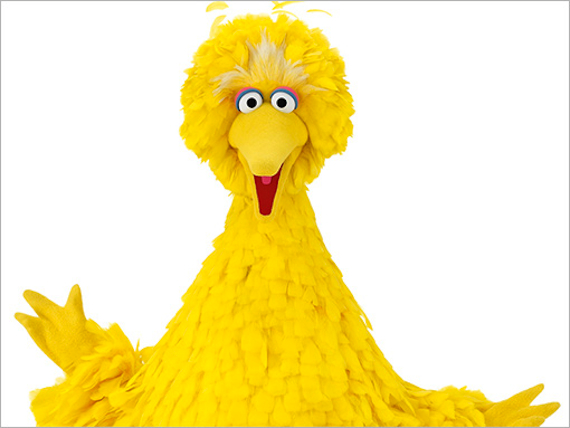
Big Bird Apologizes

We see it all the time. Athletes, celebrities and politicians caught in embarrassing, compromising or downright felonious situations. Rarely is it a victimless crime; someone has been harmed or wronged. The public makes sport of speculating as to what really happened and why the act was committed.

Regardless of what we think the punishment should be, we demand an apology. Often we are disappointed when said apology is delivered: the half-hearted mumbling, the attempt to place blame on others or the equally flaccid “I’m sorry if I offended anyone.”


This isn’t about those creatures who relish the glare of the spotlight, however – the Miley Cyruses and Anthony Weiners. I’m thinking of a product or a brand and what happens when said company owns up to a mistake. We may be ambivalent about or even unaware of said brand until we see the apology. What happens then is magical. We find ourselves not only thinking of that brand but starting to admire it – like the song that grows on you the more you hear it.

     
I came across something downright charming the other day. It wasn’t an admission of any epic proportion – rather, it was a self-effacing apology for a victimless “crime.” Sesame Workshop, the nonprofit educational organization behind Sesame Street, posted this notice on its web site when it failed to fulfill its promise of a sale on iTunes apps. Here it is in case you don’t want to click to the site:

Oops.
From September 13th to 15th, we intended to run a special three-day sale in the iTunes App Store. “Intended” is the operative word there, because we made a mistake somehow. Everything went wrong, Sesame Street Muppet chickens went crazy, Telly lost his triangle, Cookie Monster ran out of cookies, and most importantly, the three-day sale only lasted two days. The Count is very upset with us — he really wanted to count to three! (ah ha ha).
So to make it up to him (and all of you who thought you were getting discounted stuff, but weren’t), tomorrow, Saturday September 21st, we’re running a one-day, line-wide, Sesame Street app sale! Click here to open the iTunes App Store and see all of our apps!
It’s tough to harbor ill will toward Sesame Street after you read that. You’re more than willing to forgive because – let’s face it – Big Bird & Co. have amassed a mountain of goodwill over the years. The message is appropriate and reflects the brand. Heck, it’s fun. Not to say you can excuse an egregious violation of law or ethics with a whimsical haiku or limerick. Like the punishment fitting the crime, the apology must fit the transgression.    

Thank you, Sesame Street. You never stop teaching us things.


8/20/2013

You're selling ... all the time

Reputation means different things to different people.

Growing up, I would hear my parents talking about someone’s reputation – like Dick Miller, who owned the Rexall drug store downtown. He had a great reputation, by the way - generally regarded as the go-to for everything from prescription service to chocolate malts.

Later – in high school – I heard whispered conversations about a fellow teenager with a “checkered” reputation. Wonder how he got that?

In college, it was all about the reputation of your school – party school, nerd factory or springboard to a lucrative banking career?

Quickly catapulted into the world of full-time employment, I was supporting myself and continually having to make purchasing decisions. Whether I realized it or not, the reputation of the product factored into those decisions.

My first job out of journalism school was at a TV station, and my earliest encounters with reputation in a business sense were strategy sessions attended by members of the news staff, sales staff and management. To attract more viewers to our newscasts we needed to know who we were and who our competitors were: the CBS affiliate had its finger on the pulse of the community and was the most pleasing to watch, while the NBC affiliate tried to look and act important but often came off as sophomoric. As the ABC station, we were the “issues” station; we hoped viewers would get something of value from our reporting ("news you can use"). So, we capitalized on our strengths and added a dash of personality because we knew our viewership would give us permission to be human. Our news director said we should be perceived as "friendly professionals." In a few years, the station went from #3 to #1 in the ratings.
 
The lesson is  know yourself in order to succeed. Ignore your reputation at your own peril.

There’s a time and a season for reputation management: all the time and in every season. My dad, a stockbroker, once told me “You’re always selling yourself.” Too bad he died when I was only 12; I could have used more of that sage wisdom over the years.

He was right. Everything that breathes has a reputation. You have one, I have one. Our dog, Bella, has one – based on her loving disposition and temperament. It’s our most precious asset and if it should be compromised in any way, we can find ourselves in trouble. Or out on the street.

Reputation is as old as time and new as the latest celebrity blowup. Timeless, yes. Trivial, no.

Companies are wise to protect and defend their reputations. There are a multitude of ways to do it and it’s not easy. That’s why I love the pursuit, and I’ll be writing about it in this space.

Keep it honest, open and live with integrity. And I’ll talk to you soon.